
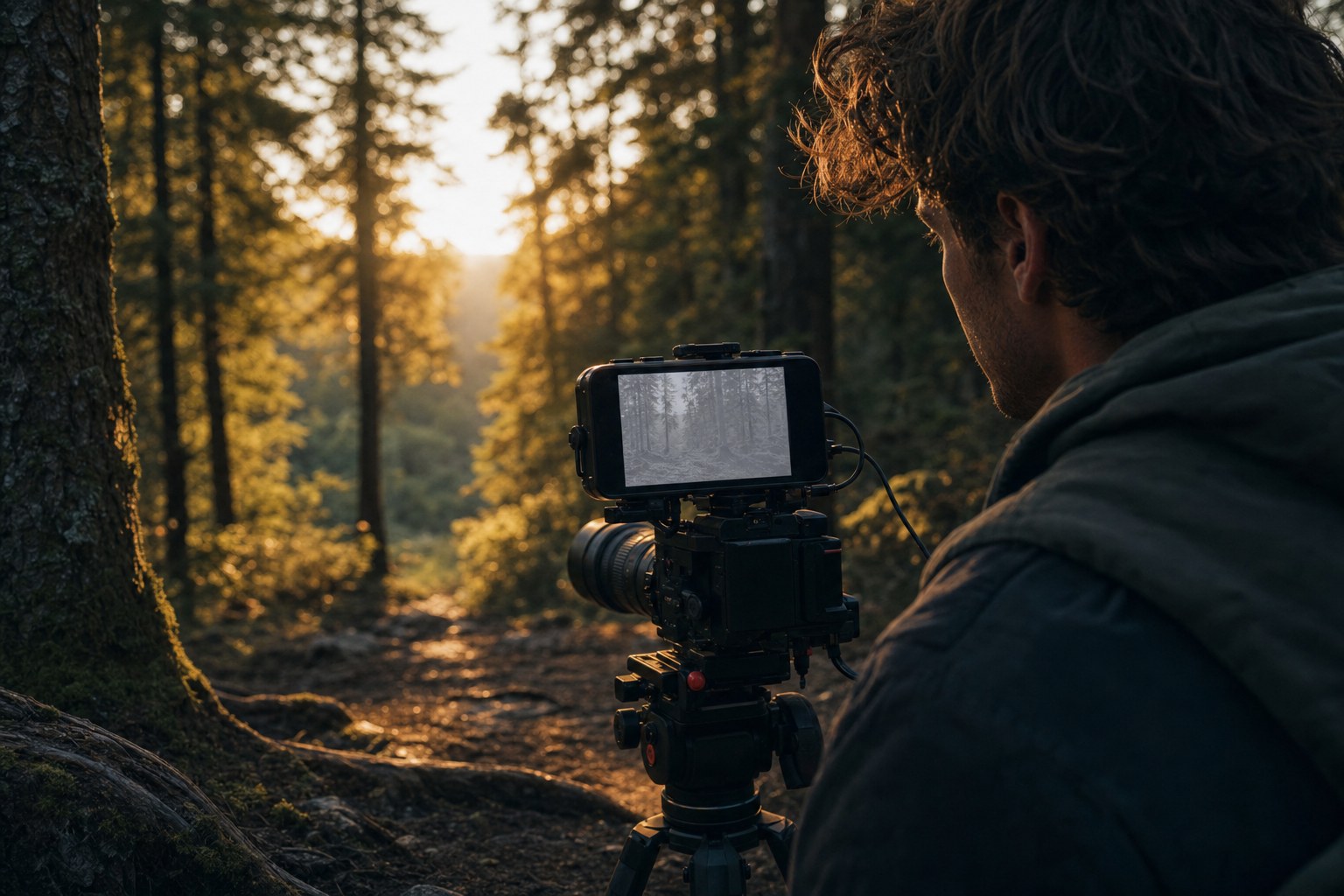
Log is not a look and it is not a quality setting. It is a trade: you give up a
usable image straight out of camera in exchange for room to work later. Whether that
trade is worth it depends entirely on what you are shooting and what happens to the
footage afterwards.
Here is the honest version, including the cases where log makes your footage
worse.
What log actually does
A camera sensor captures far more range between the darkest and brightest parts of
a scene than a standard video file can hold. A normal picture profile throws most of
that away at the moment of recording. It bakes in contrast and saturation, clips the
highlights, and crushes the shadows, because that is what makes the image look finished
immediately.
Log keeps it instead. It redistributes the sensor’s range across the file using a
logarithmic curve, so the brightest and darkest information survives. The cost is that
the image looks flat, grey and lifeless until you convert it back.
What you gain
Highlights you can pull back. A bright sky that clips in a standard
profile is gone permanently. In log it is usually still there, and a single adjustment
brings the clouds back.
Shadows you can lift. Same principle at the other end. Detail in
dark areas survives instead of turning into a black mass.
Room to grade. A flat image takes a strong look without falling
apart. Push contrast and saturation on already-contrasty footage and it goes brittle
fast.
Cameras that match. Shooting two different bodies on the same job is
far easier in log. Convert both to Rec.709 first and they land in the same place, which
is nearly impossible when both have baked in their own colour science.
What it costs
An extra step, every time. Nothing is deliverable straight from the
card. Every clip needs a conversion before anyone can judge it, including clients
watching over your shoulder.
Exposure discipline. Log is less forgiving than it looks. Underexpose
and the noise that log lifts out of the shadows comes with it. Most log formats want you
to expose brighter than feels natural.
Bigger files and slower edits. Log usually pairs with higher bitrates
and heavier codecs.
When you should not shoot log
This is the part most guides skip.
- When you only have 8-bit. This is the big one. Log spreads the
image across the available values, and 8-bit does not have enough of them to survive the
stretch back. You get banding in skies and gradients that no LUT repairs. If your camera
only offers log in 8-bit, a standard profile will look better. - When there is no grading step. If the footage goes straight to a
client, a livestream or a same-day social post, log adds work and risk for a benefit
nobody will see. - When someone else needs to judge the image on set. Unless you can
load a monitor LUT, a director looking at a flat grey picture cannot tell you whether
the shot works. - When the scene has no range to preserve. Flat overcast light, an
evenly lit interview, a white studio. There is nothing extreme to protect, so log mostly
just adds a step.
What you need for it to pay off
Three things, and all three have to be true:
- 10-bit recording, or as close as your camera allows.
- A conversion LUT that matches your exact log curve.
- Time in post to actually use the range you protected.
Miss any one of them and a standard profile is the better choice. There is no shame
in that. Plenty of professional work is shot in Rec.709 on purpose because the schedule
does not allow anything else.
What it takes to make log pay off
See it in motion
Log only pays off if the grade happens. That is where most people stop, because doing it by hand on every clip is slow. The CINEMA LUT pack covers both steps: seventeen log formats to get the image correct, and 24 graded looks to make it yours. It is the difference between shooting log and actually finishing in log.
What’s included
| Cinematic looks | 24, retro, moody and black & white |
| Conversion LUTs | 17 log formats, C-Log3 and S-Log3 included |
| Monitor versions | 17×17, for on-set preview |
| Installation guide | step-by-step PDF |
| Works in | Premiere, DaVinci, Final Cut, LumaFusion |
$29.95$44.95instant downloadGet CINEMA
If you do shoot log, start here
The first thing every log clip needs is a conversion back to Rec.709. Not a creative
look, a technical conversion that matches the exact curve your camera recorded. We
explain the difference in
what a log to Rec.709 conversion
LUT actually is.
We give the conversions away free for fifteen camera systems:
the complete conversion
pack, or the individual ones for
Sony S-Log3,
Canon C-Log3,
Panasonic V-Log and
DJI D-Log.
Once the footage is neutral, the look is the fun part. That is what our
LUT packs are for.